

At Christmastime all eyes are on the virgin birth of Jesus. But that doesn’t mean that everybody believes in that great miracle or in any other biblical miracle. I believe in the miracles recorded in scripture, and I’d love to see an astonishing sign with my own eyes. But miracles don’t accomplish what many people…

Imagine that you are God. Your eternal Son is about to assume human flesh – to become a helpless baby. Whom would you trust to father your Son? God’s choice was Joseph (Matt. 1:18).

David says that men and women are weak, sinful, and transient. Sounds sort of depressing. But David isn’t depressed. His reflections on human frailty lead him to exuberant praise (Ps. 103:1-22).
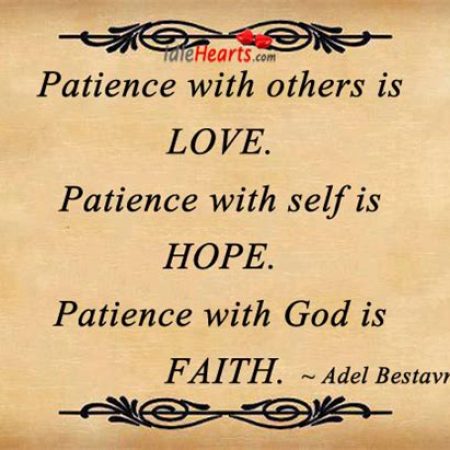
We have a good number of words to describe the person who gets angry over nothing – hotheaded, hot-tempered, quick-tempered, short-tempered. Why isn’t there a word meaning long temper? Actually, there is. The word is “patience.”

A child’s beliefs determine what is important to him, and his values dictate his behavior. How are my kids acting? What do they really believe?

In his book The Five Love Languages, Gary Chapman says that husbands and wives have different ways of expressing and receiving love. We know that God loves us, but what is his love language? What honors and pleases him?

Church-goers are fond of labeling each other as “liberal” or “conservative.” But these words mean different things to different people. And neither label is in the Bible.

Romans 1 11 For I long to see you, that I may impart to you some spiritual gift, so that you may be established— 12 that is, that I may be encouraged together with you by the mutual faith both of you and me.

14 “For the kingdom of heaven is like a man traveling to a far country, who called his own servants and delivered his goods to them. 15 And to one he gave five talents, to another two, and to another one, to each according to his own ability; and immediately he went on a journey.…

Job 9 Then Job answered and said: 2 “Truly I know it is so, But how can a man be righteous before God? 3 If one wished to contend with Him, He could not answer Him one time out of a thousand.